Bountiful Health | A Boutique Therapy Practice
Self-Esteem Therapy
in Orinda
In-person in Orinda / Online across California

For women struggling with self-doubt, shame, or the sense that they're not enough.

SOUND FAMILIAR?
Self-doubt runs in the background of almost everything you do.
Your manager tells you the project was some of your best work. You thank her, and by the time you're back at your desk, you've found three things you should have done better.
So why doesn't it ever feel true?
At dinner with friends, someone asks where you'd like to go, and "I don't mind" is out before you've even checked. When the restaurant turns out to be a letdown, you're the first one to apologize.
Before a reunion, you change your outfit twice and rehearse your answer to "So, what are you up to these days?"
You might be noticing that…
one piece of criticism sticks with you for days, even when everything else went well.
you feel like a different person depending on who you're with.
a small mistake can ruin your whole day, even if no one else noticed.
you talk to yourself in a way you'd never talk to a friend.
you're not sure who you are apart from what you accomplish or what other people need from you.
It may not look like low self-esteem from the outside.
More often, it looks like working harder than everyone else, being the one who's easy to get along with, and keeping your doubts to yourself. Over time, it shapes how you see yourself, how you relate to others, and how much of yourself you let people see.
After years of this, you may find yourself wondering: Why can't I just believe in myself by now? What would people think if they really knew me? Who am I when I'm not achieving something?
These patterns aren't a personality flaw. They may have helped you succeed or stay connected, and over time, they can become exhausting.
Self-esteem and identity therapy, in person in Orinda or online across California, can help you build a relationship with yourself that doesn't depend on how much you get done or how useful you are.
HOW IT WORKS
Self-esteem rarely changes because someone tells you you're worth it.
This work isn't about forcing confidence or becoming someone else. It's about making sense of your self-doubt and shame and, little by little, learning to treat yourself differently. In relational, depth-oriented therapy, that happens in three ways.
My Approach to
Self-Esteem & Identity Therapy
Notice the pattern.
We slow down the moments you usually rush past, like bracing for criticism before anyone has said a word, or making a joke at your own expense to get there first. You learn to notice your inner critic without automatically believing everything it says.
Understand where it started.
Self-doubt often comes from early criticism, comparison, or pressure to perform, which can teach you that your worth depends on what you achieve or how helpful you are. We look at where your inner critic got its voice, not to blame anyone, but to understand why it sounds so convincing.
Over time, our relationship becomes a place where you can disagree, take up space, or show me the sides of yourself you usually keep hidden, and find that the connection holds. Each time it does, the old belief that you have to earn your place loses a little ground.
Experience something different.

Together, we explore:
-
When a voice in your head points out every flaw and rarely gives you credit. We get to know it well enough that it no longer gets the final word.
-
When you're sure people will eventually figure out you don't belong. We look at why your own successes never seem to count as evidence.
-
When other people's lives become the measure of your own. We look at whose standards you're really trying to meet.
-
When the things you've measured yourself by, like your work, your looks, or being needed, start to change. We look at what your worth rests on now, and who you are apart from all of it.
-
When you feel pulled between your family's values and your own, or never fully at home in either world. There's room for all of it, without choosing one version of yourself.
WHAT CHANGE CAN LOOK LIKE
Over time, you may begin to…
✓ let people see a rough draft, or a rough day, without explaining it away.
✓ make a decision and trust it, even when someone else would have chosen differently.
✓ feel less pressure to prove yourself, even around people you admire.
✓ go easier on yourself on the days that don't go to plan.
✓ feel at home in who you are, whether or not anyone is cheering you on.
WHO THIS IS FOR
This may be a fit if you…
want more than surface-level confidence tips, and are looking for real change.
aren't sure how to describe what's going on, only that you'd like to feel differently about yourself.
are willing to look back at where your beliefs about yourself began.
want to move at a pace that respects your history, without being pushed to open up before you're ready.
reflect deeply and carry a lot inside, even if most people would never guess it.
Other Ways I Can Help
How you see yourself affects almost everything else.
It often shows up in relationships, in the questions midlife brings up, in anxiety or low mood, and during big changes at any stage of life.
You might also want to explore:
Relationships & Boundaries Therapy →
For when saying no feels harder than it should, or the same patterns keep coming backMidlife Transitions Therapy →
For women in midlife facing an empty nest, an aging parent, or a changing marriageHigh-Functioning Depression & Anxiety Therapy →
For overthinking, constant pressure, and feeling down even on good daysLife Transitions Therapy →
For a specific change at any stage of life, like a move, a breakup, or a new role
RELATED SPECIALTIES
MEET ANITA
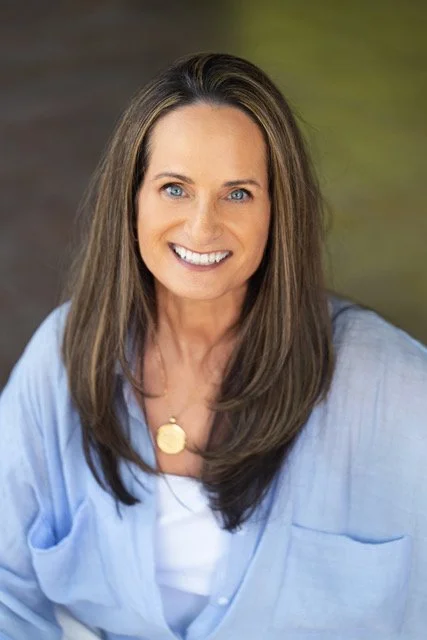
Hi, I’m Anita.
“The people I work with are typically thoughtful, reflective, and harder on themselves than they need to be. They've already thought things through in their heads. What they haven't had is a place to actually feel it.”
My own cross-cultural background is a big part of why identity and belonging matter so much to me. It means a lot to watch someone start to see themselves the way the people who care about them already do.
I don't work from a script. We follow what's on your mind, and I draw on attachment-based therapy to understand what's underneath it.
I keep my caseload small on purpose, so I have the time and attention to really get to know you.
FAQs
Frequently Asked Questions
About Self-Esteem & Identity Therapy
-
That's very common, especially if you learned early on to put other people first. Many people worry they'll seem selfish or won't know what to say. You don't have to feel comfortable to start. We'll take it slowly, with respect for the part of you that holds back and the part of you that wants something more.
-
Yes. Many people I work with can explain exactly why they doubt themselves, and the doubt still shows up the next time. Insight alone rarely changes beliefs about your worth that run this deep. Therapy gives those patterns a place to come up between us, where we can understand them as they happen and, over time, respond differently.
-
It often looks less like sadness and more like everyday habits: turning down things you'd love to try, overpreparing for things other people do on the fly, or assuming people are annoyed with you when they're just busy. It can also show up as people-pleasing, perfectionism, or feeling like you haven't done enough even when you're doing well. Underneath, shame can shape what you think you deserve.
-
The two often overlap. Self-esteem and identity work focus on how you see and treat yourself: your inner critic, self-doubt, and sense of self. Relationships & Boundaries therapy focus on how those patterns play out with other people, like people-pleasing or struggling to say no. Many people find both come up, and we can work on both.
-
Shame tends to hide. Guilt says "I did something wrong," but shame says "something is wrong with me," and the instinct is to keep it out of sight. It often forms where being fully seen didn't feel safe, so putting it into words can feel exposing. Talking about it slowly, with someone who doesn't flinch, is often what loosens its grip.
-
No. Many of the people I see for this work are women in midlife, so this page speaks most directly to them. Self-doubt doesn't keep to one age or stage of life, though. If what you've read here sounds familiar, you're welcome to reach out, and we can use a free consultation to see if we're a good fit.
GET IN TOUCH
Feeling worthy is possible.
To get started,
fill out the Consultation Request Form.
I'll reply within two business days to set up a free 20-minute consultation, where you can ask about fees, scheduling, or anything else on your mind.