MEET ANITA BARDSLEY, LMFT
Founder of Bountiful Health
Orinda Therapist
for Adults & College Students
In-person in Orinda
Online throughout California
ABOUT ANITA
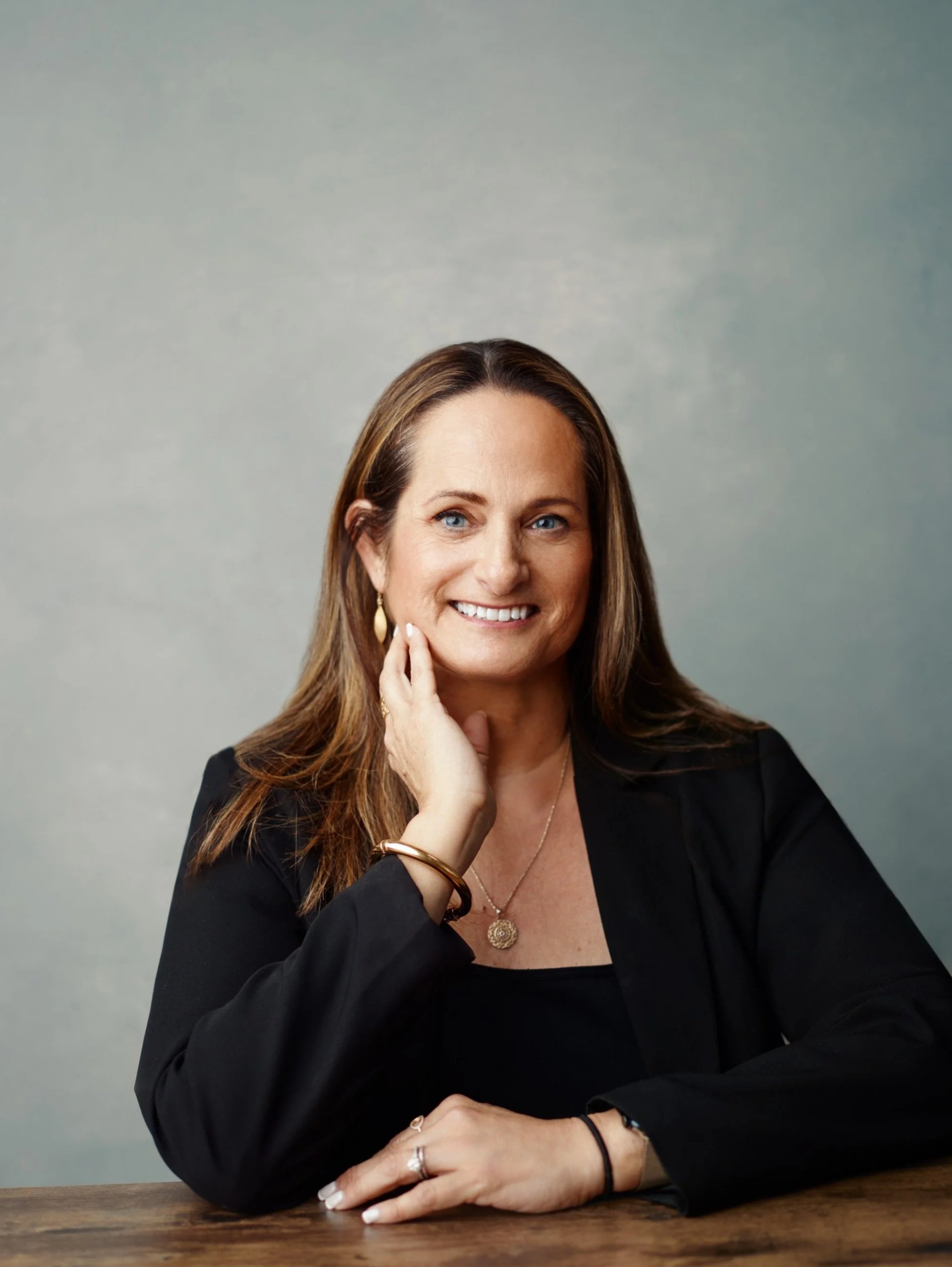
Hi, I’m Anita.
You've probably already noticed something's not working. That's usually where this starts.
Your life may be functioning, but you don't quite feel like yourself within it. You're tired in a way that sleep doesn't touch. You've probably read a dozen therapist bios that all start to sound the same, all promising a safe, judgment-free space, and closed the tab no clearer than when you opened it.
Choosing a therapist means trusting someone you haven't met yet with the parts of yourself you don't often show. That's not a small thing to ask of yourself, and I don't take it lightly that you're here, reading this, trying to get a sense of whether I might be the right person for that.
Sometimes the place to begin is simply knowing you don't want to keep living this way. You don't need to have the rest figured out yet.
My Journey to Becoming a Therapist
Before becoming a therapist, I spent years in the business world. From the outside, there was nothing obviously wrong with the path I was on. I was moving forward and building a life that made sense on paper.
But I felt stuck in it. I knew I wasn't fulfilled, and I didn't yet understand what I wanted instead.
My own experience in therapy became a turning point. What affected me most wasn't being given advice or told what to change. It was being deeply listened to. My therapist paid attention not only to what I was saying, but to what was harder to say, and helped me understand myself in ways I hadn't been able to on my own.
As things began to make more sense, I became clearer about what I wanted and eventually made a significant change in my own life: becoming a therapist.
That experience still shapes how I work today. I know how powerful it can be to feel genuinely heard and to have something that once felt tangled begin to make sense.
More About Me
Growing up as a “third culture kid”, someone who grows up outside their parents' home culture, shaped how I understand people and relationships.
Moving between cultures and being exposed to differences from a young age taught me to stay open-minded and approach people with curiosity rather than assumptions. I noticed early on how much who we are can be influenced by the room we’re in, the expectations around us, and the experiences that have shaped us.
It also left me thinking about identity, belonging, and what it means to feel like yourself. Two people can go through something similar and experience it very differently, just as very different life experiences can shape how each of us sees ourselves and the world. Your story has to make sense within the context of your life.
Outside the therapy room, I’m a wife and mother of two adult daughters. Watching them grow into themselves has deepened my appreciation for how hard growth can be and the courage it takes to move through life’s transitions while figuring out who you are.
Travel has always been a source of renewal and excitement for me. I love both returning to familiar places and exploring somewhere new. There’s something about stepping into the unfamiliar that keeps me open and reminds me there is always more to discover.

What It’s Like
To Work Together
Trust in therapy doesn’t happen because I tell you this is a safe space. It develops slowly, in the accumulation of small moments.
I remember what you told me last week. I don’t flinch when you tell me the hard part. I ask questions because I genuinely want to understand.
You don’t have to make your feelings sound reasonable before you’re allowed to have them here. We can circle back, change direction, sit with a thought mid-sentence, or stay with something that doesn’t quite have words yet.
As we talk, I’m listening for more than the story itself. I notice where you become harder on yourself, what you move quickly past, and the patterns that seem to follow you into different parts of your life. Sometimes I’ll reflect something back that you haven’t quite put together before. Other times, I may gently challenge you or invite you to stay with a feeling you would normally move away from.
Warmth matters to me, but so does honesty. I don’t want therapy to become another place where you perform, say the right thing, or avoid what matters.
I think of this as compassionate curiosity: attuned attention, real questions, and enough space for what needs to surface on its own.

Bountiful Health
A Boutique Therapy Practice
Bountiful Health was founded to offer therapy in a way that feels personal, thoughtful, and unhurried. Keeping the practice intentionally small gives us the space to know our clients well and stay closely connected to the work we’re doing together.
Professional Background
Therapy works best when it's built around you: your history, your way of seeing the world, what actually makes sense to you. My foundation is relational, psychodynamic, and attachment-based, with a trauma-informed lens throughout. I also bring in mindfulness and cognitive behavioral approaches when they're useful, adjusting as we go rather than sticking to one formula. What shapes the work is you.
Learning never really stops for me, because good therapy asks for both skill and attunement. My training helps me notice what's happening beneath the surface, but it's always in service of understanding you. Every story deserves to be met with care and respect.
-
B.S. in Business Administration – University of Redlands
M.A. in Counseling Psychology – California Institute of Integral Studies (CIIS)
-
Licensed Marriage and Family Therapist (LMFT #134882) – State of California
-
Founder, Owner, & Licensed Marriage and Family Therapist (LMFT) – Bountiful Health, Orinda, CA
Licensed Marriage and Family Therapist (LMFT) – Institute of Mindful Therapy, Walnut Creek, CA
Associate Therapist (AMFT) – Institute of Mindful Therapy, Walnut Creek, CA
Therapist Trainee – Golden Gate Integral Counseling Center, San Francisco, CA
-
California Association of Marriage and Family Therapists (CAMFT)
East Bay CAMFT Chapter
The Psychotherapy Institute, Berkeley, CA
Curious how I work?
Explore my approach →

GET IN TOUCH
Start Feeling Connected to Yourself Again
…and stop feeling like you’re just going through the motions.
To get started,
fill out the inquiry form for a free consultation.
From there, we'll set up a time to talk.